
Every worker has the right to a safe and healthy workplace—but you can’t protect those rights if you don’t know them. Understanding your health and safety rights empowers you to speak up, report hazards, and refuse unsafe work without fear of retaliation. It also ensures you know what steps to take if you’re injured or experience psychological harm on the job. When workers are informed, workplaces become more accountable, equitable, and proactive in preventing harm.
Health and Safety

Why Knowing Your Health and Safety Rights Matters.
-
Basic Health and Safety Rights of Teachers
- The Right to Know: All workers have the right to know what hazards exist in the workplace. This includes all physical and mental hazards. This also includes hazards such as risk of violence.
- The Right to Participate: All workers have the right to participate in Occupational Health and Safety activities in the workplace. This right includes being able to participate in the Joint Occupational Health and Safety (JOHS) Committee, and to report hazards and injuries.
- The Right to Refuse: All workers have the right to refuse work that is hazardous.
- The Right to Protection: All workers have the right to protection from retaliation.
Why Filing a WorkSafeBC Claim Matters.
Reporting injuries—whether physical or psychological—is not just about accessing support for yourself. It’s a crucial act that helps drive systemic change. When injuries are reported diligently, they create a record that highlights patterns and unsafe conditions in the workplace. This data helps WorkSafeBC and your employer identify hazards, enforce safety standards, and implement meaningful improvements. Filing a claim ensures you get the care and compensation you need while contributing to a safer environment for everyone.
-
How to File a Work Safe BC claim
- File a Worker’s Report of Injury or Occupational Disease To Employer (Form 6A). The employer is required to file an Employer’s Report of Injury or Occupational Disease (Form 7) within three days of receiving the report from the member.
- As soon as the Form 6A has been completed and medical attention sought, call Teleclaim at 1-888-WORKERS. A representative of WorkSafeBC will ask appropriate questions. Calling Teleclaim expedites the process. If you use the Teleclaim service, ask for a copy of your report.
- Always send a copy of Form 6A to the Surrey Teachers’ Association office.
- Inform an administrative officer as soon as possible of the injury or disease that you feel is work related. Make sure the information is documented. The employer fills out and files WorkSafeBC Form 7.
- Make sure the first aid log at the work site has been filled in by the appropriate person, especially for minor injuries.
- Get medical attention as soon as possible. Don’t wait in the hope that recovery will occur rapidly. Always report your injury or occupational disease to your doctor and request that the doctor file a Physician’s Report (Form 8) to WorkSafeBC. A WorkSafeBC claims officer should contact the worker after they have received Form 6A, or received a report from the Teleclaim Officer.
- Contact the STA Health and Safety Grievance Officer, hs@surreyteacher.org, for assistance or the BCTF WorkSafeBC Advocate, Luke Olver by email, lolver@bctf.ca or by phone, 604-871-1890.
- Keep a copy of all forms completed. Log dates and subject of appointments and conversations with the employer, WorkSafeBC, and all medical practitioners.


Joint Occupational Health and Safety Committee Resources (JOHSC)
The joint health and safety committee supports the employer’s duty to ensure a healthy and safe workplace. The joint committee brings together representatives of the employer and the workers, to identify and help resolve health and safety issues in the workplace.
- Health and Safety Evaluation Form
- Site-Based Recommendation Form
- Part 2 Division 5 – Joint Committees and Worker Representations
- Templates and resources JOHSC
- Policy 7210 – Workplace Discrimination or Bullying and Harassment
- Procedure 7210.1 – Discrimination and Bullying and Harassment: Reporting and Investigation Procedures
- Policy 10900 – Anti-Discrimination and Human Rights
STA Health & Safety Resources
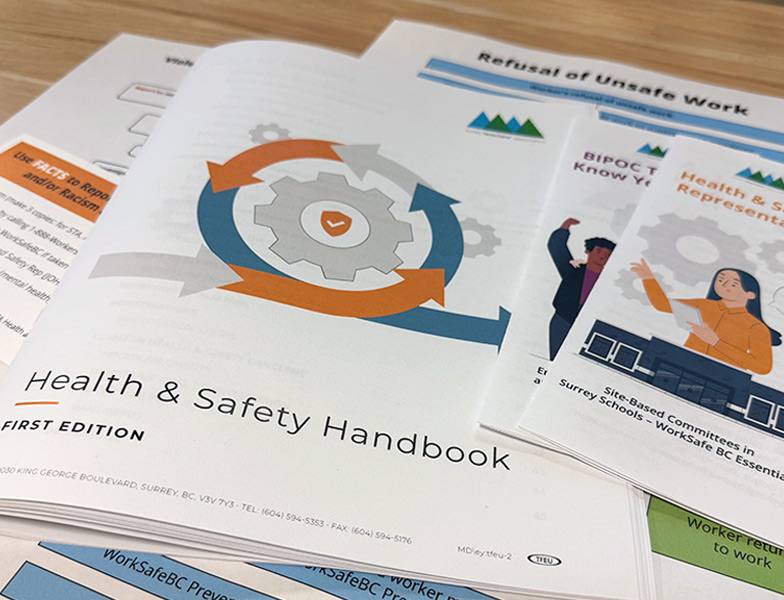
Our Health & Safety resources provide crucial information and tools for maintaining a safe work environment. Key resources include:

Frequently Asked Questions
-
What should I do if I feel unsafe in my classroom or workspace?
Immediately inform your school administrator and your site-based Health & Safety (H&S) Committee representative. Document your concerns in writing. If the issue persists, you have the right to initiate a formal process under WorkSafeBC’s right to refuse unsafe work (see Q4).
-
How do I report a health and safety concern at my school?
Report the concern to your school principal and complete your site’s Health & Safety Concern Form. Also inform your site-based H&S Committee. Keep a record of all communications. You may escalate unresolved concerns to the Joint Health & Safety Committee or WorkSafeBC. they are already involved or as part of a resolution.
-
What are my rights under WorkSafeBC if I’m injured at work?
You have the right to:
- Report your injury and receive compensation for lost wages and medical expenses.
- File a WorkSafeBC Worker’s Report of Injury or Occupational Disease To Employer (Form 6A).
- Receive support during recovery and return-to-work planning (WorkSafeBC – Injured Workers).
-
Can I refuse unsafe work? What is the proper procedure for doing so?
Yes. You have the right to refuse unsafe work under Section 3.12 of the Occupational Health and Safety Regulation. Follow the guide to Unsafe Work Refusal Flowchart.
-
What types of incidents must be reported to WorkSafeBC or the Employer?
Report all:
- Physical injuries (e.g., slips, falls, assaults)
- Psychological injuries (e.g., threats, harassment, trauma)
- Exposure to violence or dangerous substances
- Near-misses with potential for serious harm
-
- Employee & Family Assistance Program (EFAP)
- Mental health supports through WorkSafeBC for workplace-related conditions
- Counselling or medical leave if supported by a physician
- STA support through your union rep
- WorkSafeBC Mental Health at Work
-
What happens if I am assaulted by a student or another individual at work?
Report the assault by following how to report violence chart.
-
Are there any protocols in place for exposure to violence, threats, discrimination or harassment?
Yes. The district has a Violence Prevention, Discrimination, and Harassment Policy.
- File a report using the WorkSafeBC Worker’s Report of Injury or Occupational Disease To Employer (Form 6A). Learn how to report violence incidents and know your rights as a BIPOC Teacher.
- Refer to the BIPOC Educators’ Guide to Reporting Discrimination for additional guidance.
- The district must assess risks and implement a safety plan (ISEW).
-
How often are school safety inspections conducted, and can I participate?
Teachers may participate via their site-based H&S Committee. Contact your Health & Safety Rep to attend or provide feedback.
-
Do I need to fill out paperwork if I witness or am involved in an incident? If so, which forms?
Yes. Required forms may include:
- District Incident Report Log on site
- WorkSafeBC Form 6A if injured physically or psychologically
- WorkSafeBC Form 8 Physician’s Report Form if seen by a doctor
-
What is the district’s policy on indoor air quality, mold, or poor ventilation?
- Concerns must be reported through the Facilities Department.
- Request an Indoor Air Quality (IAQ) Assessment.
- Poor conditions must be mitigated per WorkSafeBC standards.
- The STA advocates for safe and healthy work environments.
-
How do I raise concerns about classroom temperature, noise, or other environmental issues?
- Report to your principal and site H&S Committee.
- Request an assessment by Facilities.
- Document the issue with photos and written records.
- If not resolved take it to your site based Health and Safety Committee.
-
What accommodations can be made for a medical condition or injury (e.g., ergonomic equipment, alternate duties)?
Accommodations may include:
- Modified duties
- Ergonomic equipment
- Scheduling adjustments
- Request through your principal and HR with medical documentation. The STA can assist in advocacy.
- Contact the Accommodations Officer at the STA for assistance at accommodations@surreyteachers.org
-
Contact:
- Your STA Rep at your site
- WorkSafeBC claims team
- STA Health and Safety Officer
- BCTF Member Support Services for complex cases
- The STA can help you with appeals, documentation, or employer communications.
-
How does the employer ensure students with known behavioural risks are properly supported to keep staff safe?
- Conduct Behaviour Risk Assessments (BRA).
- Develop and communicate Safety Plans (ISEW) to anyone working with the student.
- Provide staff with training or strategies using Low Arousal Training (Level 1, 2, and 3) before working with the student.
- Staff must be informed of any risk.
-
Can I request a copy of the risk assessment or safety plan (ISEW) for my school or a specific student?
Yes. You are entitled to access Safety Plans (ISEWS) if they affect your safety. Request through your principal. The STA can help if access is denied.
-
What should I know about chemical use (e.g., cleaning agents) in classrooms and custodial practices?
- You have the right to know about hazardous materials under WHMIS.
- Custodial staff must use approved products.
- You can request Safety Data Sheets (SDS) for any chemicals used.
- Report any unsafe or unlabelled materials.
-
Where can I find the STA’s position or advocacy efforts on Health and Safety issues?
- Attend monthly STA meetings or Health & Safety trainings.
- The STA publishes regular updates on ongoing advocacy and resources (Read the bi-weekly STA Connection newsletter).
© 2025 Surrey Teachers' Association. All rights reserved.